NA Flat-Plane DOHC V8
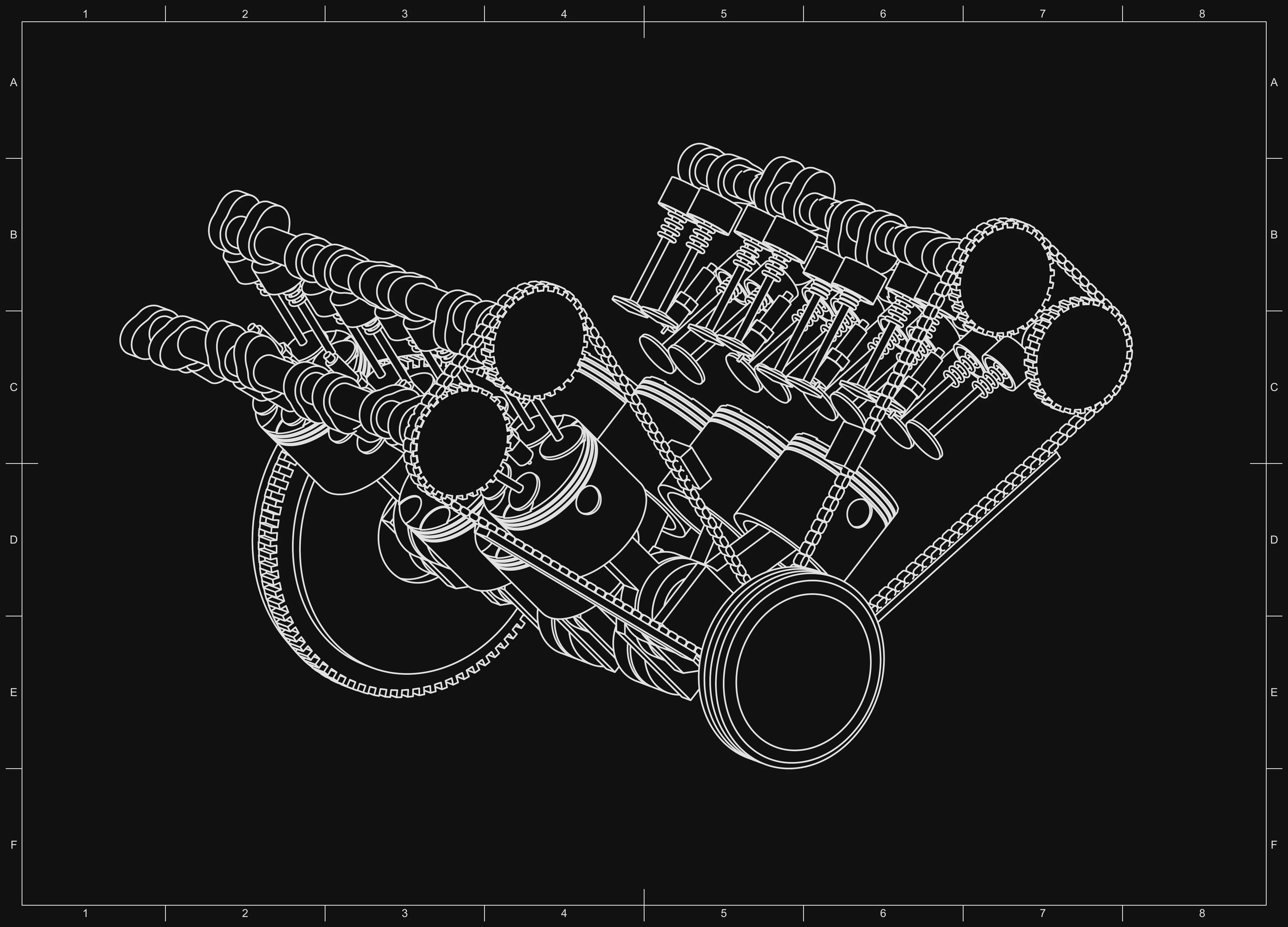
A naturally aspirated 5.0 L flat-plane V8 with double overhead cams and 32 valves, designed from scratch in Autodesk Fusion as a fully parametric model and verified for zero interference through a full 720° cycle.
- Bore × stroke
- 96 × 86 mm
- Compression
- 12.5:1 target
- Rev target
- 9,000 rpm
- Firing order
- 1-8-3-6-4-5-2-7
I was inspired by the cry of a Ferrari 458, so I designed my own engine. This is my first real CAD project.
I have been obsessed with the roar of naturally aspirated engines since I was 12, when I first saw the Need for Speed movie. That movie had a profound effect on me. It made me fascinated with cars and introduced me to Koenigsegg (my favorite car brand). So I kept it naturally aspirated, flat-plane, double overhead cams and 32 valves, and chose everything else myself. I went with a 96 mm bore and an 86 mm stroke because that lands on 5.0 L, sitting between the 458's 4.5 L and the 5.2 L in Ford's Voodoo, and made it oversquare on a 142 mm rod so that it would rev.
The four throws sit 180° apart in a single plane, so the engine fires alternately from one bank to the other rather than in the lopsided pattern of a cross-plane crank. That alternation is where that sweet sound comes from! It costs a secondary imbalance a cross-plane crank doesn't carry.
The build
Verification
I ran interference analysis on every pair of parts at the crank angles where that pair comes closest to touching, and every pair reports zero. The cams run at exactly half crank speed and both chains stay in mesh through the full 720° cycle.
At the 9,000 rpm target the mean piston speed is 25.8 m/s and peak piston acceleration lands around 5,100 g. These are both derived in the flat-plane crank.
Specification
The model is 51 user parameters driving 1,124 timeline features. I picked the bore, the stroke, the rod length and the compression height. Every other dimension follows from those four. For example, the deck height comes out of the stack of throw radius, rod length and the distance from the wrist pin to the crown.
Displacement follows the same way, from the bore, the stroke and the cylinder count, and comes out at 4,980 cc:
Core geometry
- Bore
- 96 mm
- Stroke
- 86 mm
- Displacement
- 4,980 cc
- Bank angle
- 90°
- Rod length
- 142 mm
- Rod ratio
- 1.651
- Bore / stroke
- 1.116
- Deck height
- 214 mm
- Compression height
- 29 mm
- Crank throw radius
- 43 mm
- Bore spacing
- 106 mm
- Compression ratio
- 12.5:1 target
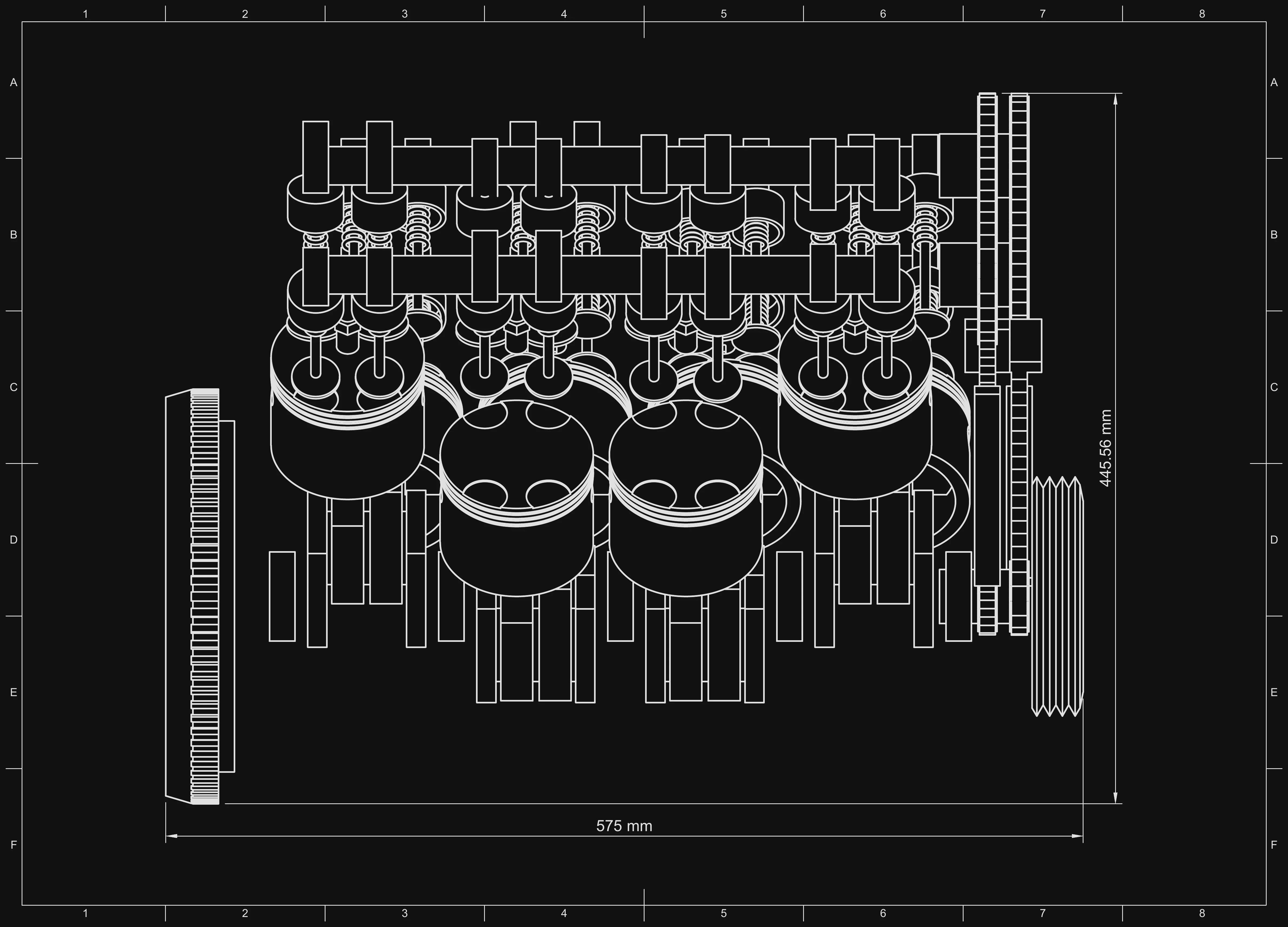
The full valvetrain and rotating assembly tables live in the DOHC valvetrain and the flat-plane crank.
I built each part once and placed it repeatedly, so one Piston master serves eight instances,
and around 346 occurrences make up the visible engine.
Bill of materials
- Pistons
- 8
- Connecting rods
- 8
- Valves
- 16 in + 16 ex
- Bucket tappets
- 32
- Valve springs
- 32
- Camshafts
- 4
- Spark plugs
- 8
- Sprockets
- 2 crank + 4 cam
- Roller links
- ~102 × 2 chains
- Ring gear
- 80 teeth
Posted
I made a few posts about this project on my Instagram too! Check them out below.